


HPAIR Future Lawyers
Global Online Legal Tournament · Mentored by Harvard Students

Global Moot Court Championship

Four weeks of legal preparation. Two weeks of live courtroom competition.

Step into the role of appellate counsel in a 6-week online legal championship. Master constitutional and AI law, submit a formal written memorial, and argue live before Harvard student benches.

Start Date 23rd January 2027 6 Weeks · Sat, 9:00 – 10:00 AM ET
Eligibility & Format Grades 8–12 Teams of 2–4 · Solo entrants matched
Early Bird Fee USD 80 USD 100 Regular Fee USD 100 / student
Register Now Explore 6-Week Curriculum
✦ STARTS 23 JAN 2027 ✦ GRADES 8–12 WORLDWIDE ✦ USD 500 PRIZE POOL (TOP 5 TEAMS) ✦ WRITTEN MEMORIAL + LIVE ORAL ROUNDS ✦ NO PRIOR LAW EXPERIENCE NEEDED
Lady Justice scales and courtroom gavel
ABOUT THE CHAMPIONSHIP

An immersive training ground,
theory to advocacy.

The Global Moot Court Championship is not a single-weekend debate tournament where students arrive unprepared. It is a structured 6-week legal training ground and appellate championship built for ambitious middle and high schoolers in Grades 8–12.

Across Weeks 1 to 3, Harvard student mentors train you in constitutional, contract, tort, and IP law alongside AI ethics, Alternative Dispute Resolution (ADR), case briefing, and drafting a formal written memorial. In Week 4, your 2 to 4 member counsel team runs a guided practice moot round before stepping into live-judged knockout rounds, semifinals, and the Championship Final in Weeks 5 and 6.

PROGRAM DETAILS

Everything you need to know, in one place.

Key dates, live Saturday session timing, team format, and entry details for the January 2027 Championship Batch.

Starts 23 January 2027 Week 1 live orientation & legal basics
Duration 6 Weeks Harvard student mentors
Live Timing Saturdays 9:00 AM – 10:00 AM ET (Live on Zoom)
Team Format 2 to 4 Members Register as a team or solo (we match you)
Who Can Enter Grades 8–12 Open worldwide · No prior law required
Entry Fee USD 80 USD 100 Early bird per student · Regular USD 100
Phase 01 · Weeks 1–3 23 Jan – 6 Feb

Learn Law, ADR & Draft Memorial

Master core legal fields, AI ethics, case briefs, and submit your team's written Summary of Arguments.

Phase 02 · Weeks 4–5 13 Feb – 20 Feb

Practice Round & Knockouts

Test your arguments in a mentor-guided practice moot before advancing into live knockout oral rounds.

Phase 03 · Week 6 27–28 Feb

Semifinals & Championship Final

Top teams argue Saturday semifinals and Sunday's Grand Final before senior judges for the USD 500 prize pool.

CHAMPIONSHIP REWARDS & RECOGNITION

A USD 500 prize pool.
Five winning teams will be chosen.

Winning counsel teams are selected by the Harvard student judge panel based on combined written memorial scores, oral advocacy, and judicial responsiveness.

DISTINCTION 01
Winning Team 01
Championship Winner
Share of USD 500 Pool + Winner Citation
DISTINCTION 02
Winning Team 02
Championship Winner
Share of USD 500 Pool + Winner Citation
DISTINCTION 03
Winning Team 03
Championship Winner
Share of USD 500 Pool + Winner Citation
DISTINCTION 04
Winning Team 04
Championship Winner
Share of USD 500 Pool + Winner Citation
DISTINCTION 05
Winning Team 05
Championship Winner
Share of USD 500 Pool + Winner Citation
Guaranteed for Every Registered Participant Co-Signed Certificate of Completion · Written Memorial Portfolio · Individual Judge Score Sheet & Rubric Feedback
100% Receive Judge Feedback
FULL 6-WEEK CURRICULUM

Four weeks of preparation.
Two weeks of competition.

Click through Weeks 1 to 6 below. Each colour marks a distinct stage of your legal training, practice moot, and championship tournament.

Live Sessions: Saturdays, 9:00 AM – 10:00 AM ET · Starts 23 January 2027
WEEK 1 · SAT, 23 JAN 2027 FOUNDATIONS, RESEARCH & MEMORIAL

Foundation: Legal Basics, Foundational Domains & AI Challenges

Live Mentor Session · Saturday, 9:00 AM – 10:00 AM ET

Students learn how courts and legal roles operate, how to turn a problem statement into a structured legal position, and explore core legal disciplines alongside emerging AI ethics and hallucination dilemmas.

Topics Covered

•Courts, Legal Roles & Approaching a Case Problem Statement
•Finding the Legal Issue, Relevant Law & Initial Case Strategy
•IP, Tort, Contract & Constitutional Law Fundamentals
•AI Ethics, Algorithmic Hallucination & Proposition Terminologies
Week Deliverable Issue framing worksheet & foundational proposition mapping

Week 1 of 6
COMPETITION THEMES

Propositions at the edge of law and technology.

Each championship moot problem sits at the intersection of established doctrine and modern digital challenges. Full case files are released to registered teams.

THEME 01

Generative AI, Copyright & Fair Use

Where intellectual property law meets generative foundation models, and how courts test the boundaries of fair use when machines create derivative works.

THEME 02

Data Privacy, Trade Secrets & Connected Devices

How confidential commercial information, algorithmic hallucinations, and personal data protection hold up across automated systems and IoT ecosystems.

THEME 03

Online Free Speech, Defamation & Platform Liability

Where constitutionally protected expression ends, reputational harm begins, and how far an online platform's legal responsibility reaches.

THEME 04

Product Safety, Liability & Young Users

How tort and consumer-protection frameworks hold technology makers accountable for foreseeable safety risks posed to minors.

HOW TEAMS WORK

Team size and composition.

Students are divided into teams of up to four members (minimum of two). Regardless of team size, all rounds follow a strict two-speaker structure, with remaining members providing strategic support. Before any oral round, every team submits a short written Summary of Arguments, the memorial.

Note: If a team has only 2 members, both will act as speakers and share researcher duties. There is nothing to prevent the judges or bench from posing questions to the Researcher as well.

The Rule of Law volume, Lady Justice scales, and courtroom gavel
ORAL ROUND · ISSUE 1 ROLE 01

Speaker 1

Argues Issue 1 before the bench.

  • Presents opening submissions on Issue 1
  • Answers bench questions on the first issue
  • Delivers rebuttal on Issue 1
ORAL ROUND · ISSUE 2 ROLE 02

Speaker 2

Argues Issue 2 before the bench.

  • Presents submissions on Issue 2
  • Responds to bench questioning on the second issue
  • Supports the overall rebuttal strategy
PREP + ORAL SUPPORT ROLE 03

Researcher / Substitute (up to 2 members)

Handles the digital legal code, assists in drafting the written memorial, and notes points for rebuttal.

  • Manages the digital legal code
  • Co-drafts the written memorial
  • Tracks rebuttal points during the round
LEARN FROM THE BEST

Harvard Student Mentors

Collegiate pre-law leaders and Harvard graduates who train your team and judge your oral rounds.

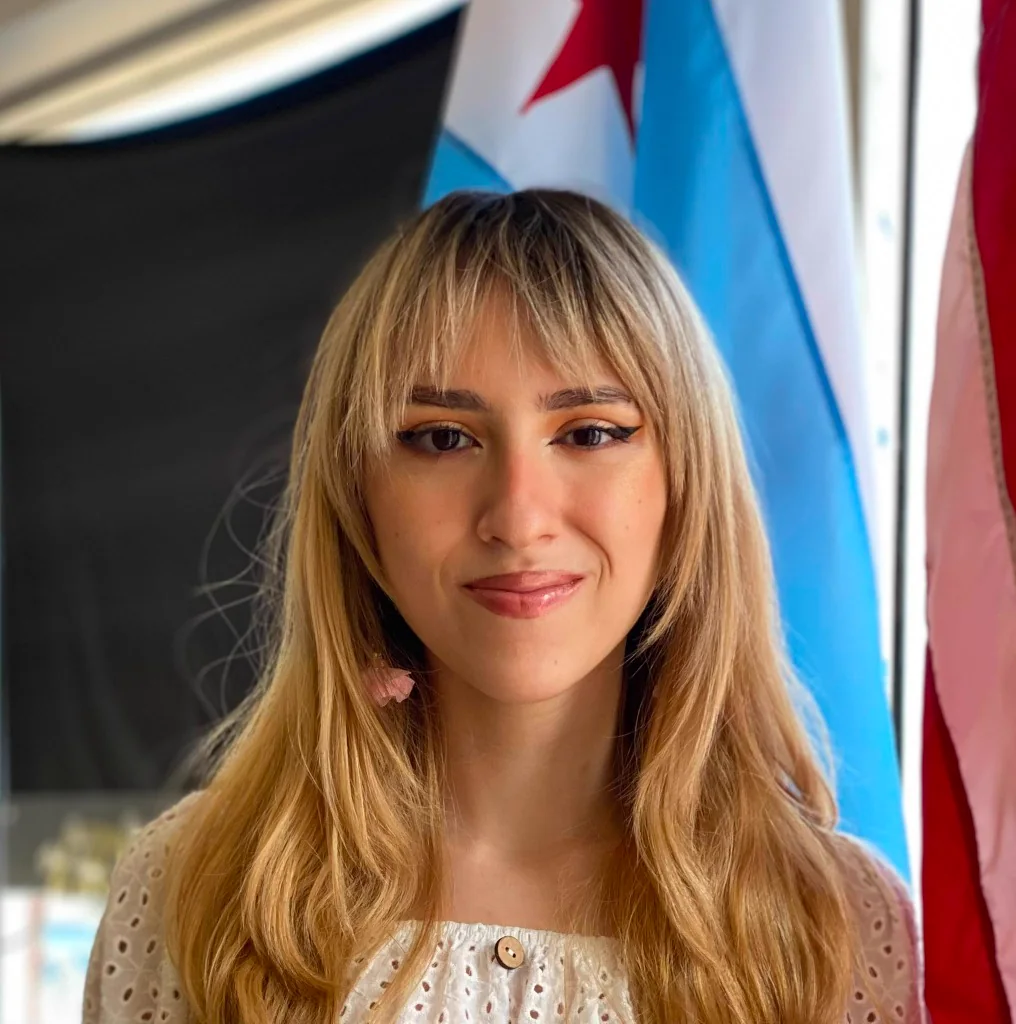
Katherrin Billordo

Katherrin Billordo

Harvard University, Class of 2026 · Art, Film & Visual Studies and Psychology · Minor in Economics

Katherrin is a 2026 graduate of Harvard University with a certificate in Civic Engagement. She served as VP of Law and Nonprofits for the Latinos in Finance and Tech club, worked with legal immigration non-profits, and built partnerships and programming with Harvard Law School alongside Government coursework in Public Policy. At 16 she founded Visionary Art Gallery, a 501(c)(3) non-profit.

LAW & NON-PROFITS VP HARVARD LAW SCHOOL PROGRAMMING CIVIC ENGAGEMENT FOUNDER, 501(C)(3)
Tsion Debebe

Tsion Debebe

Harvard University, Class of 2026 · Government (International Relations & Development)

Tsion is a 2026 Harvard Government graduate focused on international relations, public policy, and legal advocacy. She worked on county employment and education policy as well as legal non-profits assisting low-income youth, and has been active across the Black Pre-Law Society and Harvard Model Congress.

GOVERNMENT BLACK PRE-LAW SOCIETY MODEL CONGRESS POLICY & NON-PROFITS
Hannah McLaughlin

Hannah McLaughlin

Harvard College & Visiting Scholar at Oxford · Legal Advocacy & Civic Policy

Hannah is an undergraduate at Harvard College and visiting scholar at the University of Oxford, active with legal advocacy groups, ethical governance, and civic engagement initiatives. She trains students in Socratic case analysis, persuasive courtroom storytelling, and structured legal rebuttal.

LEGAL ADVOCACY OXFORD VISITING SCHOLAR SOCRATIC CASE ANALYSIS CIVIC GOVERNANCE
ROLES STUDENTS ROTATE THROUGH

Six dimensions of legal work.

Every student experiences the whole of a case, not just one seat at the table.

Research Counsel

Finding and evaluating legal authorities.

Writing / Drafting Counsel

Structuring and drafting the legal argument.

Oral Advocate

Presenting submissions and responding to questions.

Case Strategist

Identifying strengths, weaknesses and priorities.

Negotiator / Mediator

Exploring settlement and managing competing interests.

Evidence Analyst

Organising facts and assessing evidentiary relevance.

TANGIBLE STUDENT OUTCOMES

It does not end with a certificate alone.

The goal is not to teach law. It is to help students see how law operates and how lawyers think, so they can answer the real question: do they want to build a career in it?

Official co-signed legal certificate folio and fountain pen on mahogany desk Complete Legal Portfolio
Closing Capstone Reflection

Personal Reflection

Understanding of whether legal work genuinely interests the student, written in their own words at the close of the competition.

HPAIR Future Lawyers
Co-Signed Certificate

Case Analysis / Case Brief

Ability to organise facts and identify legal issues.

Legal Research Exercise

Ability to find and evaluate legal sources.

Written Legal Argument / Memorial

Ability to structure and support a legal position.

Negotiation Exercise

Understanding of dispute resolution and legal strategy.

Moot Court Submission

Ability to communicate legal reasoning orally.

Moot Feedback Sheet

Evidence of individual strengths and areas for development.

FREQUENTLY ASKED QUESTIONS

Questions students & parents ask first.

Clear answers on prior experience, solo vs. team registration, Saturday timings, and championship rounds.

Do I need prior legal, MUN, or debate experience to enter?+

No prior legal or moot court experience is required. Weeks 1 to 3 teach legal reasoning, case briefing, ADR, and memorial writing from the ground up, followed by a non-elimination practice moot in Week 4 before competitive rounds begin.

Can I register individually if I do not have a team yet?+

Yes. You can register either with 2 to 4 schoolmates or as a solo entrant. Individual registrants are matched into balanced 2 to 4 member counsel teams in compatible time zones ahead of Week 1.

When does the championship start and what is the weekly schedule?+

The upcoming batch starts on Saturday, 23 January 2027 and runs for 6 weeks on Saturdays from 9:00 AM to 10:00 AM ET live on Zoom, culminating in Semifinals on Saturday, 27 February and the Grand Final on Sunday, 28 February 2027.

What is the entry fee and what does it include?+

The Early Bird entry fee is USD 80 per student (Regular Fee USD 100). It covers all 6 weeks of Harvard-mentored training, official case propositions, the guided practice moot, knockout tournament entry, judge score sheets, and your co-signed certificate.

Can our school register multiple Moot Court teams?+

Yes. Schools frequently enter multiple 2 to 4 student delegations. Reach out via WhatsApp or email [email protected] for school delegation onboarding.

Take the first brief.

Registration for the 23rd January 2027 Championship Batch is now open for Grades 8–12. Early bird places are limited.

Starts 23 January 2027 · USD 80 Early Bird Regular Fee USD 100 · Grades 8–12 · Saturdays, 9–10 AM ET
Terms & Refund Policy
Register Now Ask on WhatsApp